DEFQualitySystem
- Dwg
- BK-02
- For
- Caterpillar Tech Challenge 2025 · Team MechMinds
- Role
- Design, build & test
- Tools
- SolidWorks · Raspberry Pi · Laser-cut acrylic
- Year
- 2025
- Result
- Top 10 of 1,400 teams
Brief
Diesel exhaust fluid should be 32.5% urea (ISO 22241-1). A tank that checks the fluid first — and routes bad batches away.
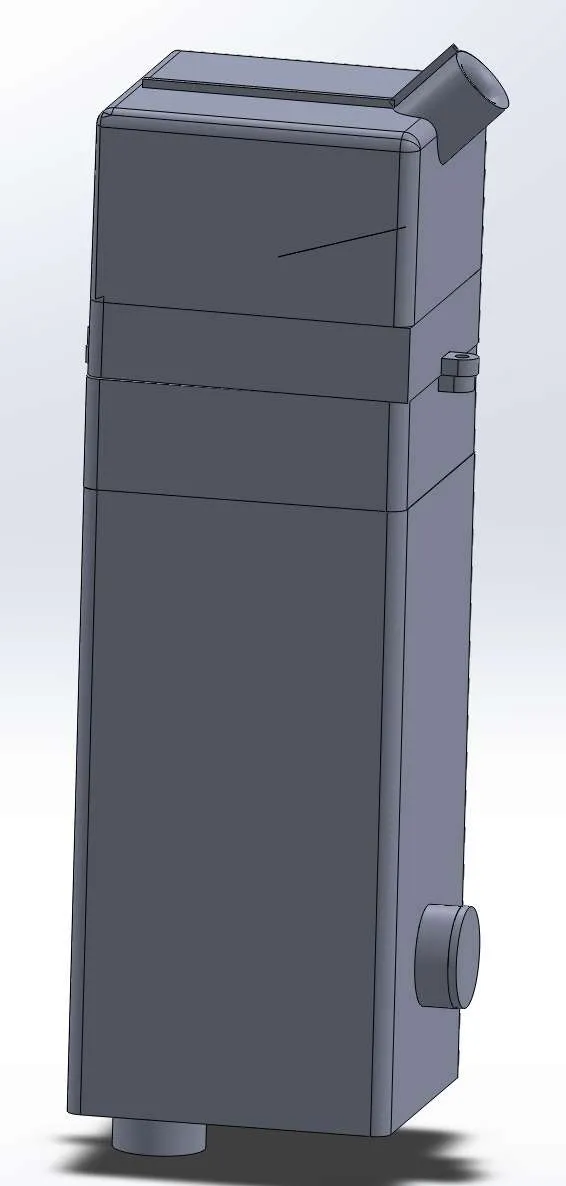
A diesel exhaust fluid tank that checks the fluid before accepting it. DEF drives NOx reduction in the exhaust, so the tank measures urea concentration at the filler and routes good and bad batches into separate compartments. For Team MechMinds, Bhakti designed the tank in SolidWorks, built the Raspberry Pi analyser and fabricated and tested the acrylic prototype — a Top 10 finalist of 1,400 teams.
The problem
DEF (AUS 32) is injected into the exhaust to reduce NOx. ISO 22241-1 specifies 32.5% urea in deionised water, but DEF sold in the mass market often misses that figure. A tank that simply accepts whatever is poured in has no way to stop a bad batch reaching the system.
The brief
Build a DEF tank with a mechanism that measures fluid quality and controls filling before the fluid reaches the main storage. The proposal: reagent-free, contactless detection of dissolved urea using near-infrared transmittance, with good and bad DEF segregated into their own tanks by solenoid valves.
Constraints
A student budget of ₹6,000–7,000 for the full system, of which the two IR LEDs alone were estimated at ₹1,800 each. Measurement had to work without reagents or contact with the fluid, and the prototype had to stay watertight while holding DEF through repeated test cycles.
Design
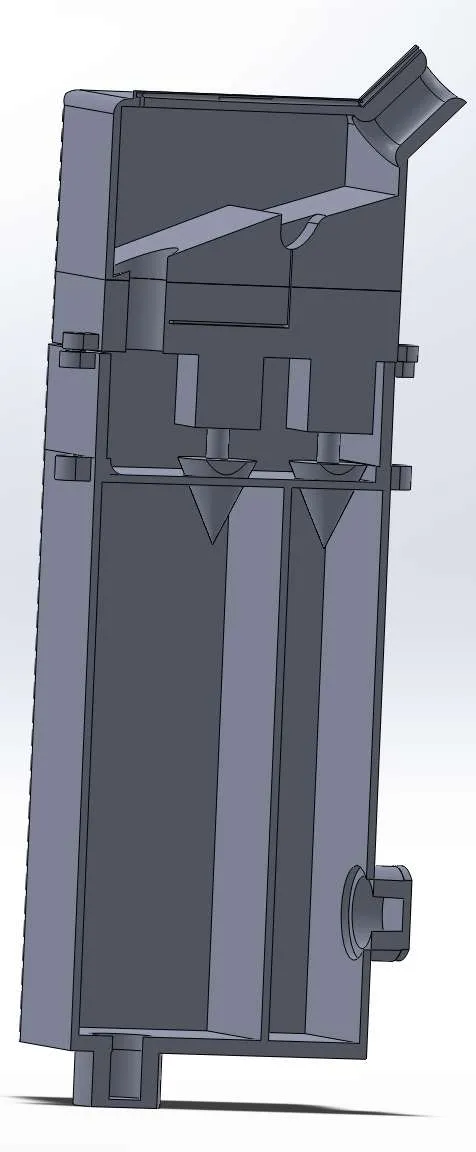
Designed the tank in SolidWorks as two parts — upper and lower — that mate into one body. The upper part takes fluid from an angled filler neck into an analysis chamber with a 1 × 50 × 10 mm sample slot. Below it, two solenoid-operated outlets drop the fluid into separate storage compartments — one for in-spec DEF, one for rejected fluid.
Sense
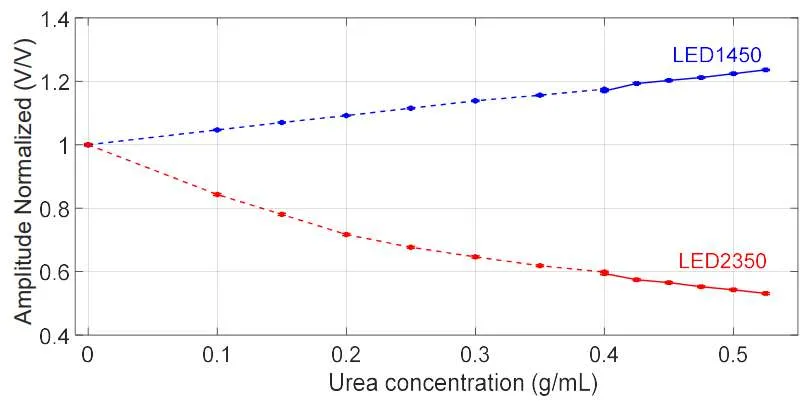
Concept: water absorbs strongly at 1450 nm and urea at 2350 nm. Taking the transmittance ratio R = T₁₄₅₀ / T₂₃₅₀ and applying the Beer–Lambert law suppresses the water signal and isolates urea concentration — contactless and reagent-free. Build: a Raspberry Pi with a Pi Camera reading a refractometer, checked against the 32.5% reference, with level sensors and solenoids deciding the route.
Build
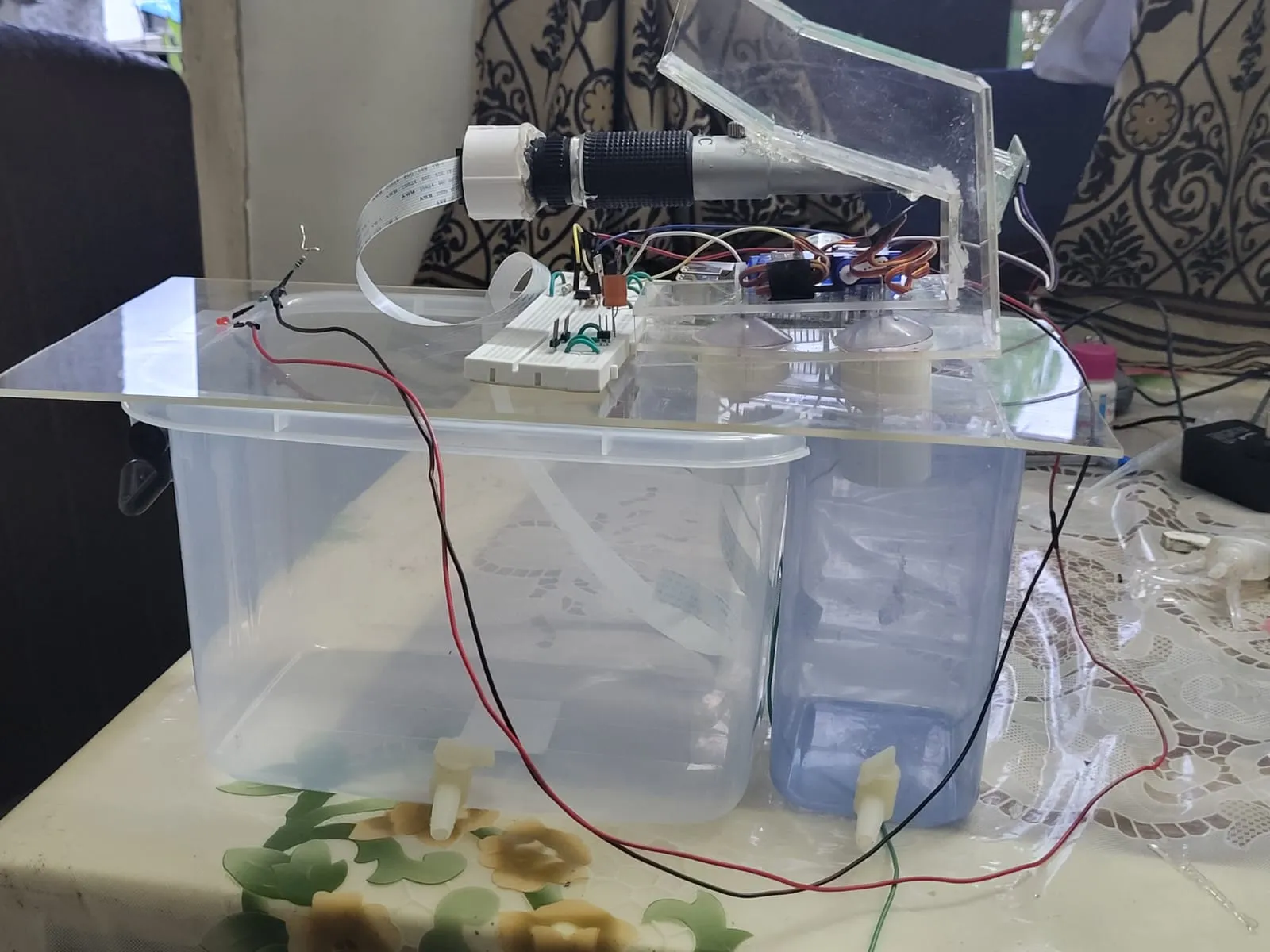
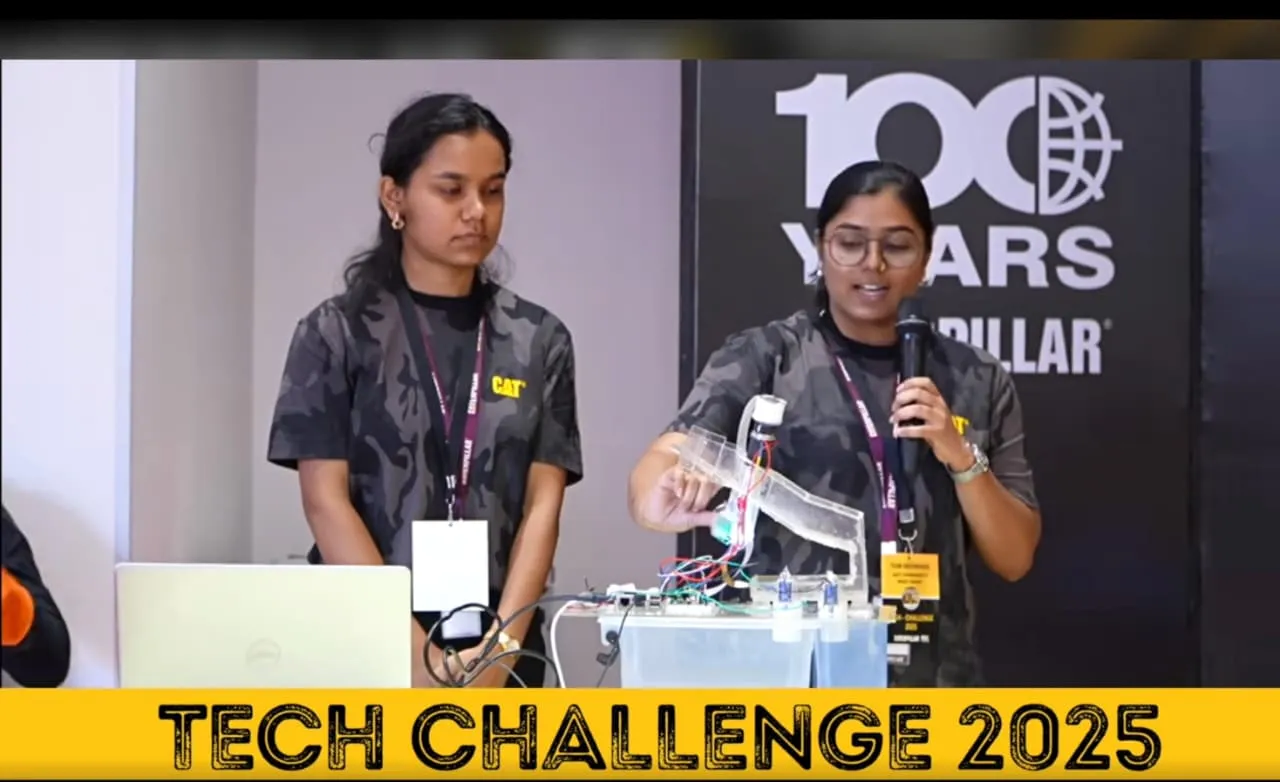
Fabricated the prototype from laser-cut acrylic panels, bonded with Araldite for a watertight seal so it could hold DEF during testing. Wired the level sensors and solenoid valves to the Raspberry Pi analyser. Then ran repeated tests, moving the refractometer and light source until concentration readings were accurate and consistent from one sample to the next.
Pitch
Presented the working prototype at the national finals at the World Trade Center, Chennai, as one of the Top 10 of 1,400 teams. The pitch covered both layers of the project: the NIR transmittance principle proposed for production, and the built Raspberry Pi analyser, level sensing and solenoid routing that proved the tank concept on the bench.
Specification
(09)- Target concentration
- 32.5% urea in deionised water (ISO 22241-1)
- Sensing concept
- NIR transmittance, 1450 nm (water) / 2350 nm (urea)
- Signal
- R = T₁₄₅₀ / T₂₃₅₀, Beer–Lambert law
- Built analyser
- Raspberry Pi + Pi Camera + refractometer
- Routing
- 2 solenoids, level sensors, pass / reject tanks
- Control logic
- Pass if |C − 325| ≤ 1.5 (C = urea % × 10); solenoids close after 5 s
- Sample slot
- 1 × 50 × 10 mm
- Tank
- SolidWorks; laser-cut acrylic, Araldite-sealed
- Budget
- ₹6,000–7,000 estimated
Problems solved
Consistent readings
A refractometer read by camera is only as good as its alignment and lighting. Ran iterative tests on the refractometer position and the light-source position inside the prototype until the measured concentration was accurate and repeatable against the 32.5% reference.
A watertight acrylic tank
The tank is a set of laser-cut acrylic panels, not a moulded part, so every joint was a potential leak. Bonded the sections with Araldite to make the prototype watertight enough to hold DEF through test cycles.
Fail-safe routing
A stuck-open valve would defeat the system. The control logic opens one solenoid for in-spec fluid and the other for everything else, and a 5 s safety timeout closes both. Level sensors work alongside the solenoids in the built prototype.
My part
- Built the Raspberry Pi analyser — Pi Camera and refractometer, checked against the 32.5% ISO 22241-1 reference
- Integrated level sensors and solenoid-actuated routing into separate tanks
- Designed the tank in SolidWorks; laser-cut it in acrylic and sealed it with Araldite
- Ran iterative tests to fix the refractometer and light-source positions
Team MechMinds, with team lead Aaditi Shankarshetti.
Takeaways
- Sensor placement matters as much as the sensor; test positions before fixing the design.
- Separate the proposed principle from the built proof, and present both clearly.
- Watertight joints in a fabricated tank need planning from the first CAD sketch.